

Chancellor Healey’s maiden budget confirms that it’s politics what drives economics, and not the other way round. Politically, it was understandable. The government is boxed in by the accumulation of 21st-century tax burdens on a struggling economy. And the Bank of England will have told Healey’s Treasury that inflation will almost certainly rise due to developments in the Middle East which will also undermine economic growth.
It is a recipe for stagflation faced by his namesake, an earlier Healey chancellor in the 1970s. But don’t tell the voters.
Further constraints come from Labour’s parliamentary party, populated by capitalist-haters screaming for more welfare. All Healey could do is what all socialist politicians resort to, which was to raid savers’ savings to the tune of £4.3bn. It might not sound a lot in a £3 trillion economy, but a parable about straw and a camel’s back comes to mind.
Property prices are already declining as a result of previous policies, so no matter we’ll tax landlords as much as 49% of their rental profits. They are a hate figure for all socialists, as are “rich” savers who are similarly affected. It amounts to a raid on private individuals’ savings to cover a soaring welfare bill which broadly remains untouched.
The direction of Healey’s policies should come as no surprise, justified by Keynesian misconceptions. By comparing the success of China’s economy with that of the UK’s stagnation, we will be struck by China’s sky-high savings rate. Meanwhile, the UK’s is under a continuing savings tax squeeze and struggles to match 10%. This is illustrated in the ONS chart below (note the covid shutdown led to an aberration in 2020):
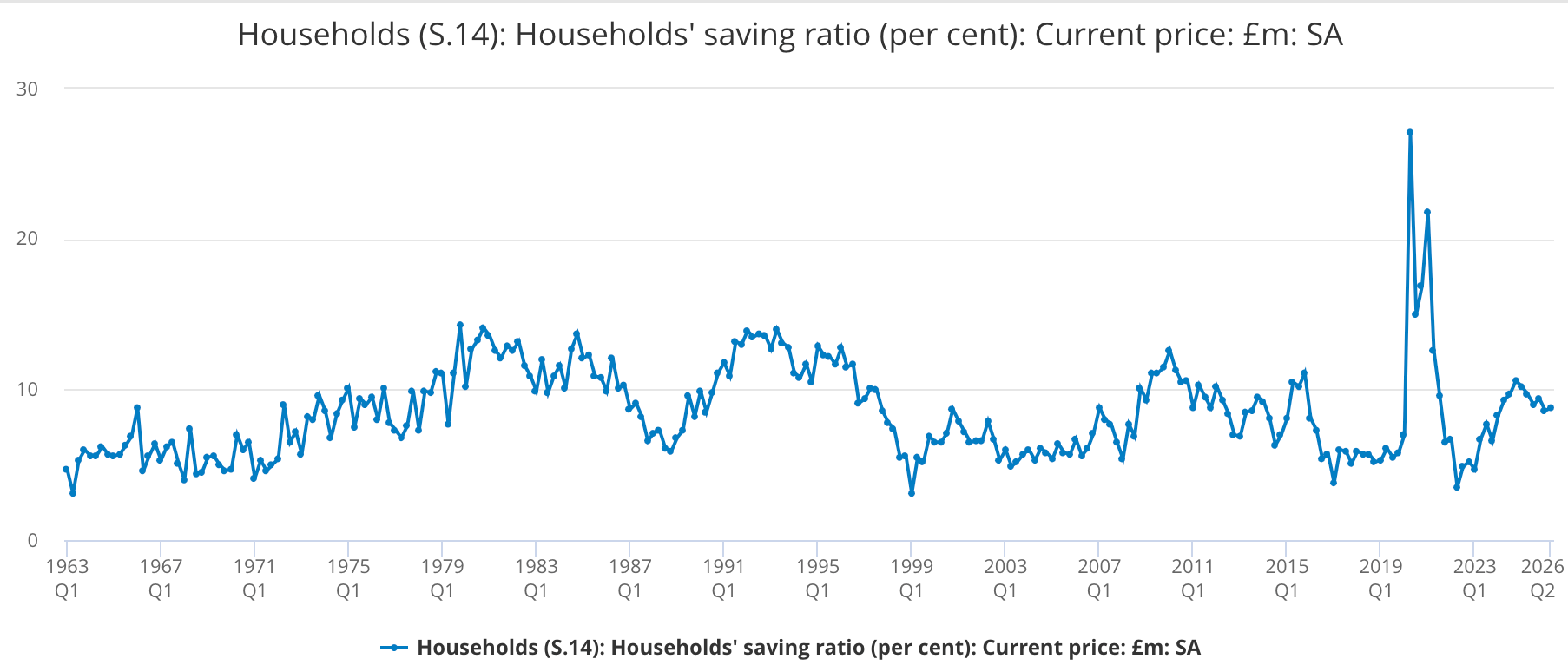
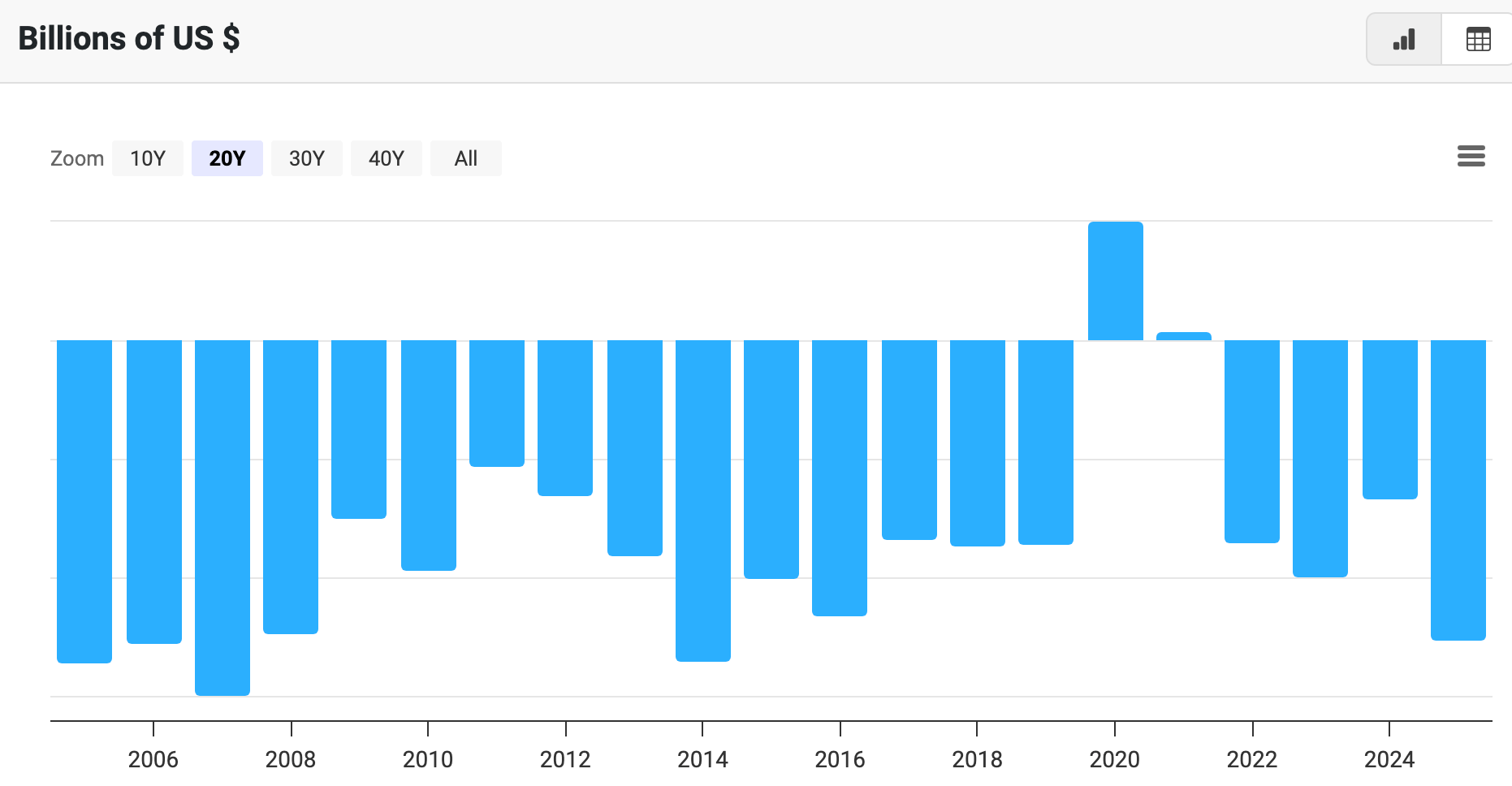
This is arguably the most important factor the Keynesians would not like you to see. A high savings rate reduces consumer spending while providing stable finance for industrial production. It is the recipe for economic progress and technological development. Furthermore, other things being equal it leads to a surplus on the balance of trade. China’s massive trade balance is directly linked to her high savings rates, while the deficits on the UK’s balance of trade are linked to her low savings rate:
Put another way, Healey’s tax on savings is an additional burden on the economy, which will further undermine the perennially over-optimistic outlook of the Office for Budget Responsibility which advises the Treasury.
The UK is on a path of continuing decline and immiseration. But cheer up, it will soon come to an end as the entire G7 led by the US faces a forthcoming bond crisis which will destabilise financial markets and seriously undermine currencies. Metaphorically, we are about to move from the torture chamber to the scaffold. Get it over with, and we can more on.
Once a nation decides that it is both moral and ethical to steal one man's property to give it to another, it has crossed the Rubicon. History is replete with examples which show that once men know that they can vote themselves largess from the public treasury, costs spiral upward and the snouts in the trough multiply until the tax takers outnumber the tax payers. It is why such governments cannot exist without debt, because if they had to finance their extravagances with taxes, it would lead quickly to revolt and, in response, to tyranny. The foundations of the West have been destroyed, it now floats on a sea of debt. When the debt scam ends so does the West.
We are seeing the wages of socialism. Socialism destroys the very wealth needed to support itself). It is a downward spiral that, once begun, is very hard (maybe impossible) to stop. Socialism also attracts those who are inherently violent and more than ready to adopt any excuse for stealing the fruits of others' labors either through the ballot box or the smashed store window. But as Alasdair has pointed out, promising to cut social benefits is a losing proposition at the ballot box. An alternative plan is to slash and burn not property but government regulations at all levels. Make it more enticing and easier to work. The model, of course, is Hong Kong under the gentle ten year guidance of Sir John Cowperthwaite.